What's the Difference Between a Water Softener and Reverse Osmosis?
Chad Baxter, Licensed Plumber
Water Softeners Plus LLC · Updated March 2026
A water softener treats all the water in your home by removing calcium and magnesium. Reverse osmosis is a drinking water system that removes approximately 98% of all dissolved solids. They're not interchangeable — and for most Idaho homes, you probably want both.
What a Water Softener Does
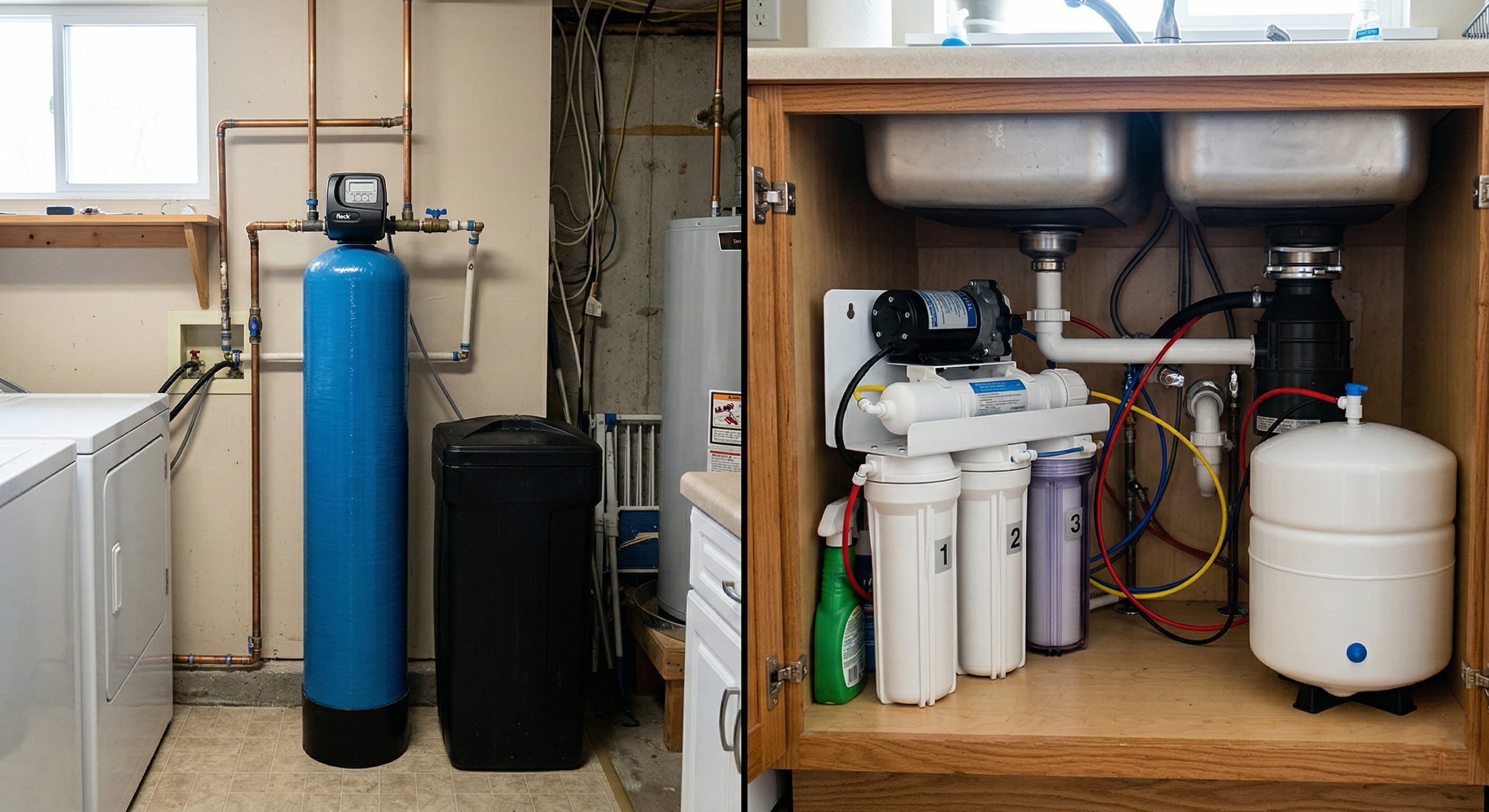
A water softener is a whole-house system. It connects to your main water line before the water reaches any tap, shower, or appliance. Every drop of water in your home passes through it.
Its job is specific: remove calcium and magnesium through a process called ion exchange. These are the minerals that make water “hard” and cause all the problems Idaho homeowners know too well — scale on faucets, white spots on dishes, dry skin after showers, and the slow destruction of water heaters, dishwashers, and washing machines.
A softener doesn't purify your water. It doesn't remove bacteria, nitrates, chlorine, or other dissolved solids. What it does is protect your home's entire plumbing system and every appliance that uses water. In Idaho Falls, where water runs 14+ grains per gallon, that protection is significant.
What Reverse Osmosis Does
A reverse osmosis system is a point-of-use system. It's typically installed under your kitchen sink with its own dedicated faucet. Only the water you draw from that tap goes through the RO process.
Its job is broader: force water through a semi-permeable membrane that removes approximately 98% of all total dissolved solids. That includes hardness minerals, but also nitrates, arsenic, chlorine, heavy metals, and nearly everything else that's dissolved in your water. The result is clean, purified drinking water right from your kitchen tap.
An RO system doesn't protect your plumbing or appliances — it only treats the water at the single tap it's connected to. Your shower, dishwasher, washing machine, and water heater are unaffected.
A note on installation
Most RO systems go under the kitchen sink, but Chad prefers to install the RO equipment down in the utility room right next to the water softener when the home's layout allows it. It takes a bit more plumbing to run the line up to the kitchen faucet, but it frees up all that space under your sink — no bulky filter canisters to work around every time you reach for the dish soap.
Side-by-Side Comparison
| Water Softener | Reverse Osmosis | |
|---|---|---|
| Coverage | Whole house — every tap, shower, and appliance | Single tap — typically your kitchen sink |
| What it removes | Calcium and magnesium (hardness minerals) | ~98% of all dissolved solids |
| Protects appliances | Yes — water heater, dishwasher, washing machine, plumbing | No — only treats drinking water |
| Improves drinking water | Somewhat — removes hardness, slight taste improvement | Yes — purified, clean drinking water |
| Helps skin and hair | Yes — removes minerals that cause dryness | No — doesn't affect shower or bath water |
| Installed where | Utility room, near main water line | Under kitchen sink or in utility room |
| Price (installed) | $1,799 | $699 |
Why They Work Better Together
A water softener and reverse osmosis system aren't competing options — they're complementary. The softener handles your home. The RO handles your body.
“It takes bad water and makes it good. It takes good water and makes it great. It takes great water and makes it almost perfect.”
— Chad Baxter, on running softened water through an RO system
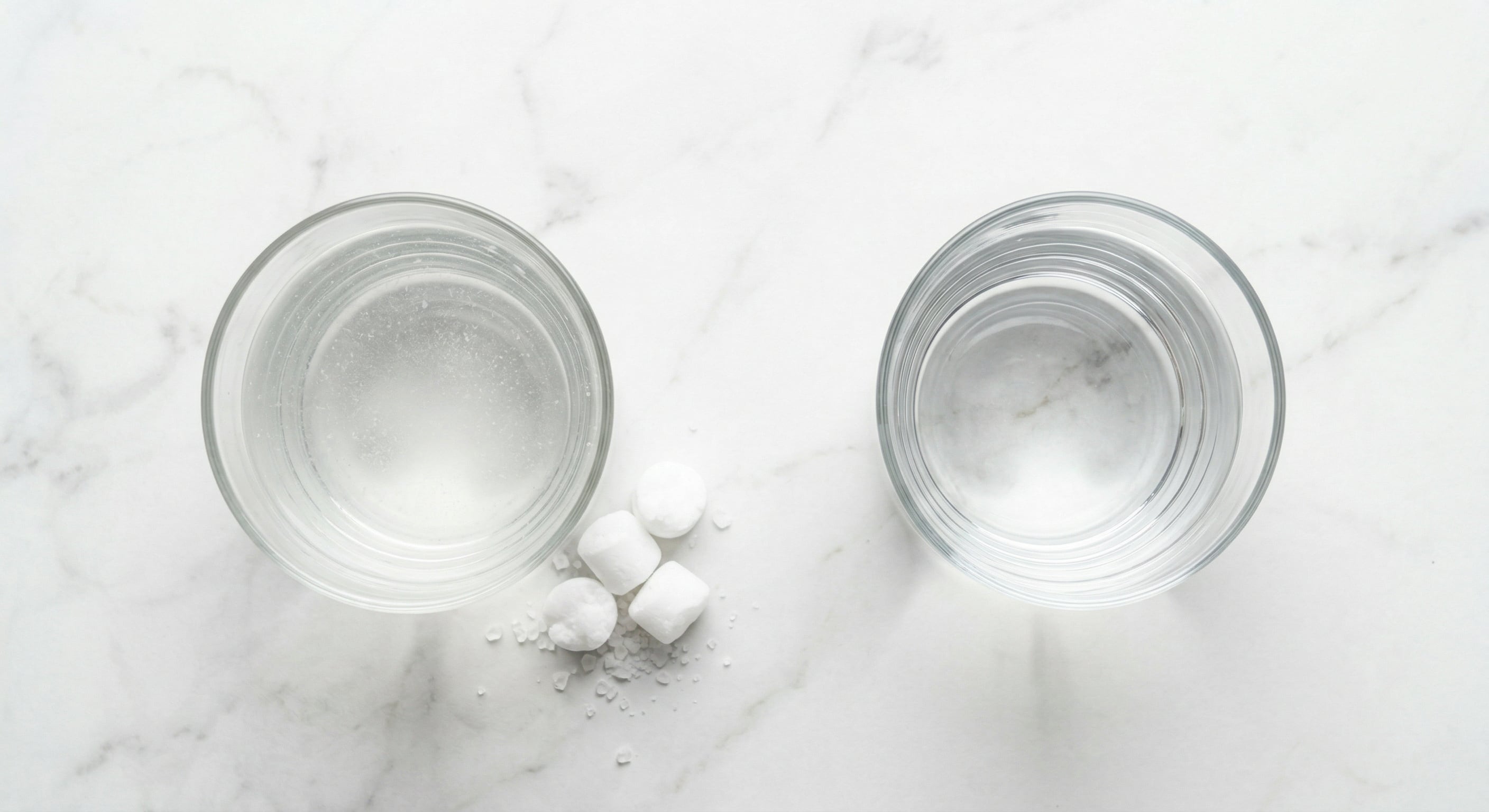
Here's the practical benefit of pairing them: when you run softened water through an RO system, the RO membrane isn't fighting hardness minerals. That means it works less hard, lasts longer between filter replacements, and produces an even cleaner end product. You get better drinking water and lower maintenance costs than running raw hard water through RO alone.
A softener alone takes care of about 80% of the water quality issues in a typical Idaho home. Adding RO covers the remaining 20% — the stuff that affects your kidneys, liver, and overall health when you drink it over years.
So Which One Do You Need?
Every home in Southeast Idaho → Water Softener
At 14+ GPG, a softener is the baseline. It protects your plumbing, extends appliance life, eliminates scale, and improves your skin and hair. If you only get one system, this is it.
Families who care about drinking water quality → Add RO
If you're buying bottled water, using a Brita pitcher, or just want the cleanest possible water for drinking and cooking, reverse osmosis at your kitchen sink is the upgrade. It removes approximately 98% of everything in the water.
Homes on well water → Strongly consider both
Well water in Southeast Idaho often tests higher than city water for hardness and may contain additional contaminants like nitrates or arsenic that city treatment would normally address. A softener plus RO gives you comprehensive protection.
What It Costs
We keep pricing simple and transparent:
- Water softener (NuGen Fusion XT), installed: $1,799 — includes the unit, all plumbing, programming, and 400 lbs of salt.
- Carbon filter (city water), installed: $1,099 — whole-house cartridge filter that removes chlorine before it reaches the softener.
- Reverse osmosis system, installed: $699 standard faucet, $799 premium faucet.
- Softener + RO Bundle (well water), installed: $2,299 — saves $199.
- City Water Package (carbon + softener), installed: $2,699 — saves $199. Recommended for most Southeast Idaho city water customers.
- Complete Home Package (carbon + softener + RO), installed: $3,299 — saves $298. Every drop of water in your home, treated.
Both systems are installed by Chad Baxter, a licensed plumber with over 24 years of experience. No subcontractors. No surprise fees. See the full pricing breakdown here.
Still not sure which one you need?
Where does your home's water come from?
Not Sure What You Need?
Chad offers free water assessments for homes in Southeast Idaho. He'll test your water, explain what's in it, and recommend only what makes sense for your situation — no pressure, no sales pitch.
Frequently Asked Questions
Do I need both a water softener and reverse osmosis?
In Southeast Idaho, we recommend a water softener for every home — it protects your plumbing, appliances, skin, and hair from the region's extreme hard water (14+ GPG). If you also care about the purity of your drinking water, adding reverse osmosis at the kitchen sink gives you water that's had approximately 98% of all dissolved solids removed. The two systems handle different jobs and work best together.
Can I just get reverse osmosis without a water softener?
You can, but there are two downsides. First, without a softener, hard water will still damage your plumbing, appliances, and fixtures throughout the rest of your home — RO only covers the one tap it's connected to. Second, hard water wears out the RO membrane faster, meaning more frequent filter replacements and higher long-term maintenance costs. Running softened water through the RO system extends the membrane's life and improves the end result.
Does a water softener make water safe to drink?
Idaho city water is already safe to drink — it meets all EPA standards. A water softener removes calcium and magnesium, which improves taste slightly and eliminates scale, but it doesn't remove other dissolved solids, nitrates, or trace contaminants. For the purest possible drinking water, add a reverse osmosis system.
How much does a water softener and RO system cost together in Idaho Falls?
Water Softeners Plus installs the NuGen Fusion XT water softener for $1,799 and reverse osmosis systems for $699 (premium faucet upgrade $799). The Softener + RO Bundle is $2,299 — saving $199. For city water customers, the Complete Home Package adds a carbon filter ahead of the softener for $3,299 — saving $298. Both are professionally installed by a licensed plumber.
Does reverse osmosis remove fluoride?
Standard residential RO systems can reduce fluoride levels, but complete fluoride removal is extremely difficult and typically requires specialized equipment costing significantly more. We're upfront about this — if fluoride removal is your primary concern, we'll have an honest conversation about what's realistic.
How long does a reverse osmosis system last?
The RO unit itself lasts many years. The filters and membrane need periodic replacement — typically the pre-filters annually and the membrane every 2-3 years, depending on your water quality and usage. Running softened water through the system extends the membrane life because it's not fighting hardness minerals.