Do I Need a Water Softener if I'm on City Water in Idaho?
Chad Baxter, Licensed Plumber
Water Softeners Plus LLC · Updated March 2026
Yes — Idaho city water is treated for safety, not softness. Idaho Falls city water still measures 14 grains per gallon.
Yes. Idaho city water is treated for safety, but the treatment process doesn't remove the calcium and magnesium that make water hard. Idaho Falls city water still measures 14 grains per gallon — well above the threshold where a water softener makes a significant difference.
This is the most common misconception we hear: “I'm on city water, so it's already treated. Why would I need a softener?” It's a fair question. Here's the honest answer.
What City Water Treatment Actually Does
The City of Idaho Falls treats your water to make it safe to drink. That means eliminating bacteria, viruses, and other microbial contaminants that could make you sick. A small amount of chlorine is added as a precaution to protect against anything that might enter the system between the treatment facility and your tap.
That's important work, and Idaho Falls does it well. The city's water consistently meets or exceeds EPA and Idaho Department of Environmental Quality standards.
But here's what the treatment process does not do: it doesn't remove dissolved minerals. The calcium and magnesium that cause water hardness come from the Eastern Snake River Plain Aquifer — the underground source of Idaho Falls' water supply. As groundwater moves through basalt rock and limestone deep below the surface, it picks up those minerals naturally. They're not contaminants. They're not dangerous. And the city has no reason to remove them.
So what arrives at your faucet is water that's microbiologically safe — but still loaded with hardness minerals at 14 grains per gallon.
What City Treatment Does
- Eliminates bacteria and viruses
- Adds chlorine for microbial safety
- Meets EPA drinking water standards
- Makes water safe to drink
What City Treatment Doesn't Do
- Remove calcium or magnesium
- Reduce water hardness
- Prevent scale buildup
- Protect your appliances from mineral damage
What 14 GPG Does to Your Home
The Water Quality Association classifies anything above 10.5 GPG as “very hard.” Idaho Falls exceeds that by a wide margin. Here's what that means in practical terms.
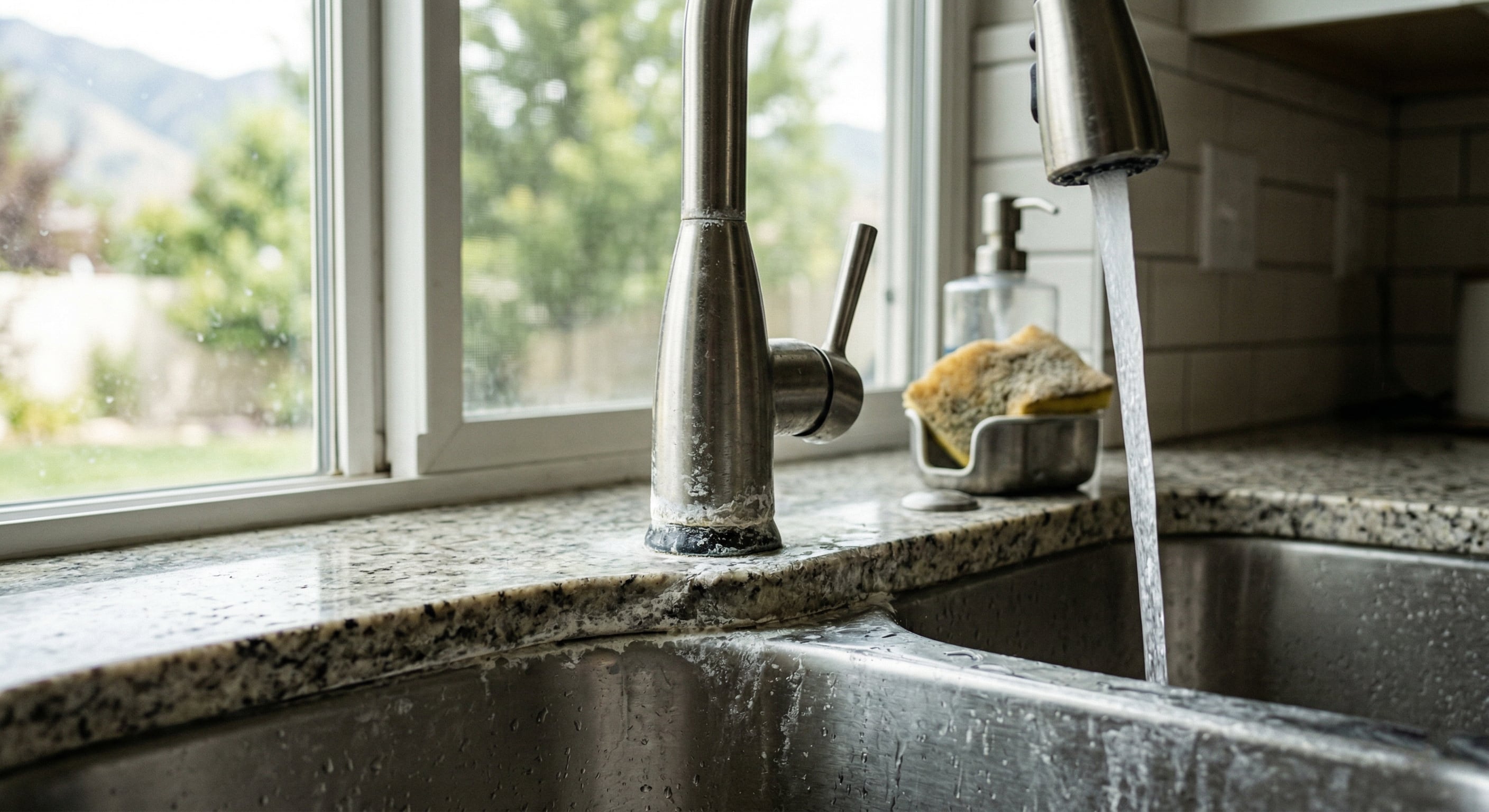
The stuff you can see: White scale buildup on your faucets and showerheads. Water spots on dishes and glasses no matter how much rinse aid you use. A chalky ring forming inside your toilet bowl. Soap that doesn't lather well. Skin that feels tight and dry after a shower. Hair that looks dull no matter what shampoo you try.
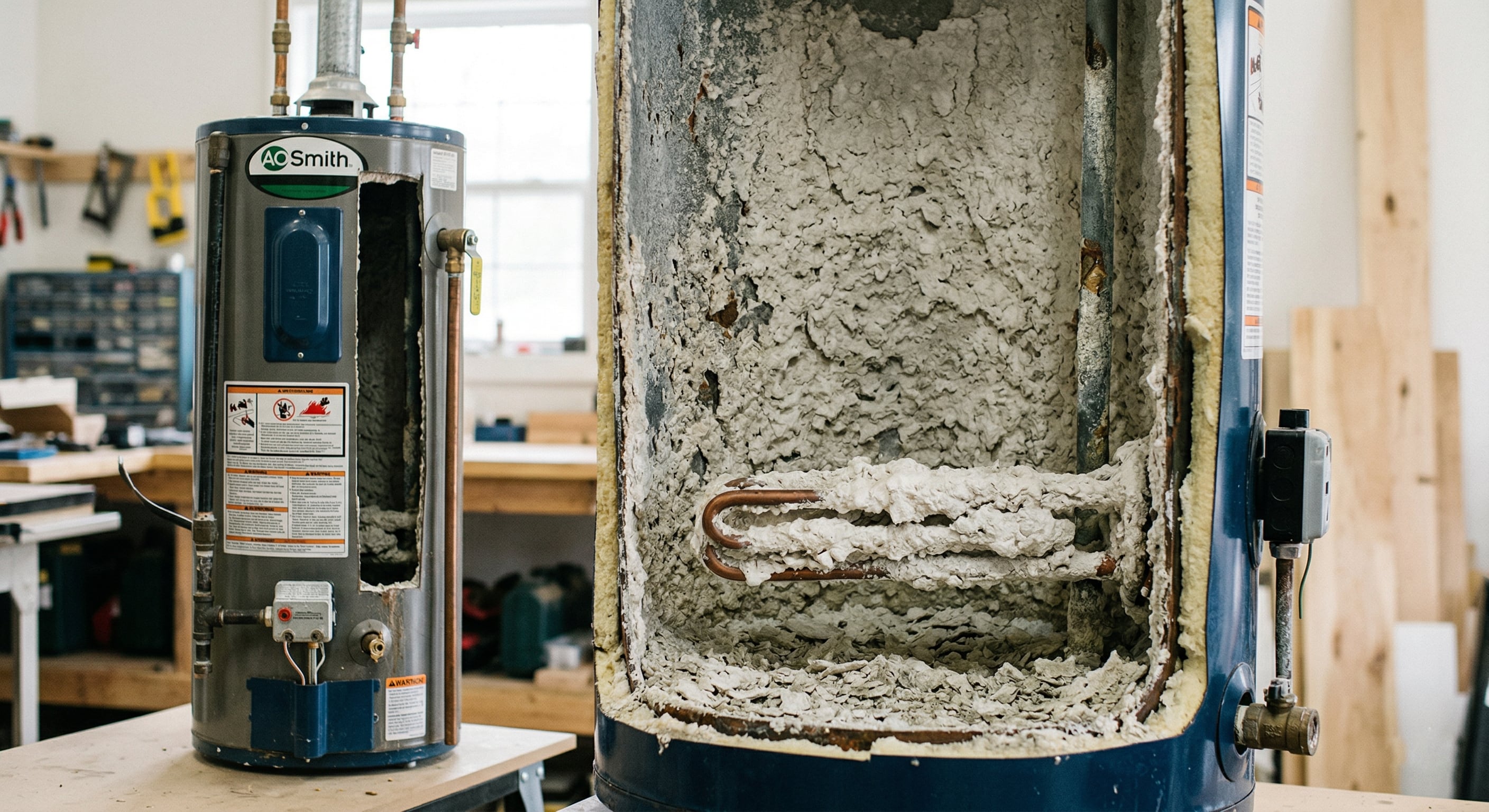
The stuff you can't see: This is where it gets expensive. Hard water coats the heating element inside your water heater with mineral scale. That insulating layer forces the heater to work up to 29% harder to reach the same temperature — which shows up on your energy bill every month. Over time, it cuts the heater's lifespan roughly in half. The same thing happens inside your dishwasher, washing machine, and any other appliance that heats water.
The Math on Mineral Load
At 14 GPG, a family of four using an average amount of water pushes over 200 pounds of dissolved calcium and magnesium through their home's plumbing every single year. That mineral load doesn't disappear — it deposits on every surface the water touches, layer by layer, month after month.
When You Don't Need a Water Softener
We're not in the business of selling people things they don't need, so here's when you can skip it:
Your building already has one. Some newer apartment complexes and condos in the Idaho Falls area have a whole-building water softener. If your water already feels soft and you don't see scale, you might be covered. A quick water test will confirm.
You're in one of Idaho's rare soft-water pockets. A few areas in the state have naturally softer water, typically where the source is surface water rather than deep aquifer. This is uncommon in Southeast Idaho, but it exists. Again — test first.
You're not on Idaho water. If you're reading this from Florida or the Pacific Northwest, your water is likely much softer and a softener may not be worth the investment. This article is specifically about Idaho conditions.
For everyone else on city water in Idaho Falls, Ammon, Rexburg, Pocatello, Blackfoot, Shelley, Rigby, or anywhere in Southeast Idaho drawing from the Snake River Plain Aquifer — yes, a water softener will make a noticeable difference in your daily life and save you money on appliances and energy over time.
Take the 1-minute quiz
Where does your home's water come from?
Find Out Exactly What's in Your Water
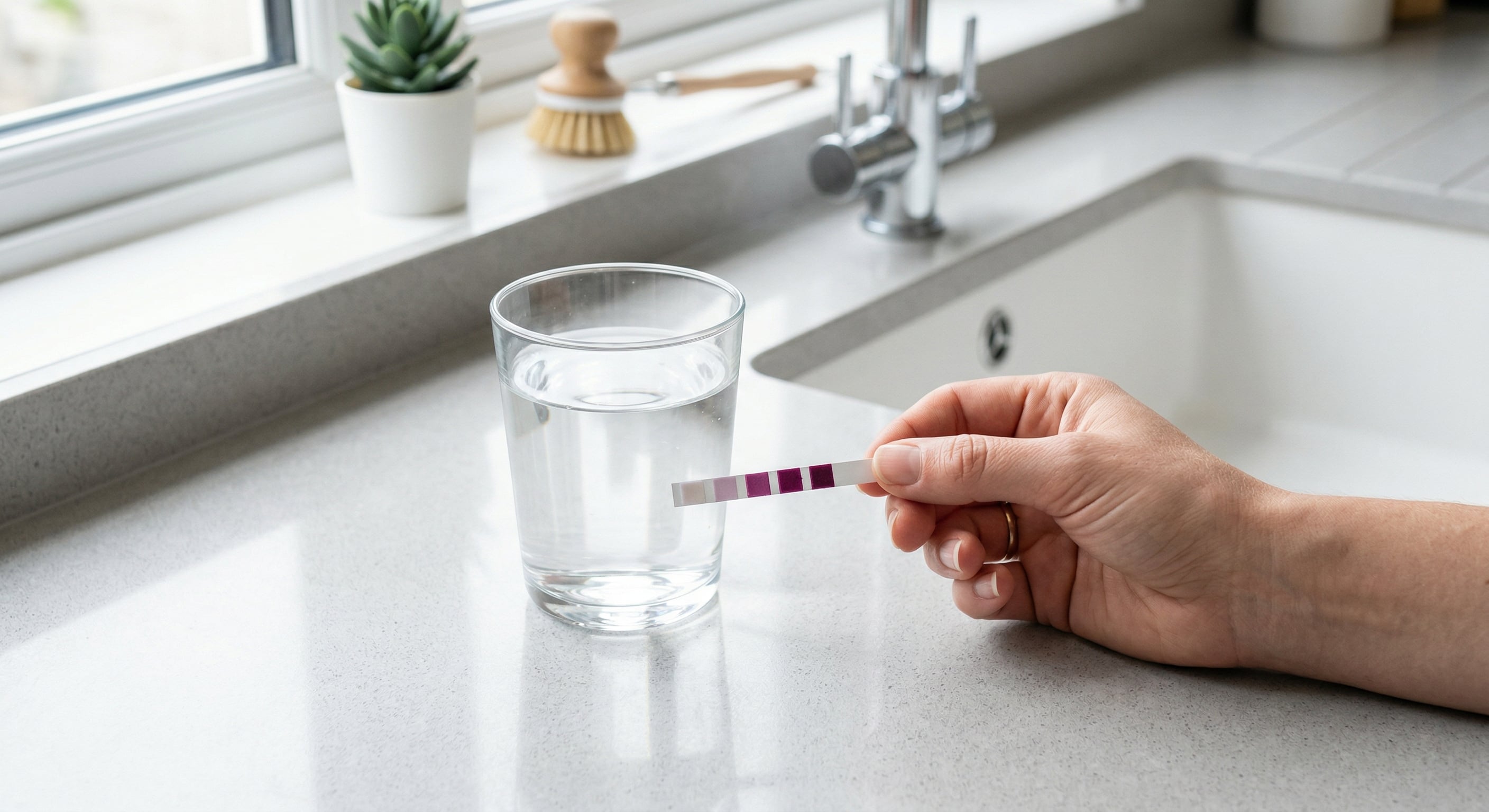
We test your water for free — no obligation, no sales pitch. We'll tell you your exact hardness number and walk you through what it means. If you don't need a softener, we'll tell you that too.
Frequently Asked Questions
Does the city of Idaho Falls soften the water?
No. The City of Idaho Falls treats water for microbial safety by adding a small amount of chlorine. The treatment process does not remove calcium, magnesium, or other hardness minerals. City water measures approximately 14 grains per gallon, which is classified as 'very hard.'
Is Idaho Falls city water safe to drink?
Yes. Idaho Falls water meets or exceeds all EPA and Idaho DEQ drinking water standards. However, 'safe' and 'soft' are two different things. The water is safe but very hard, which causes scale buildup, appliance damage, and dry skin and hair.
How do I know if my apartment already has a water softener?
Check your utility room or mechanical closet for a tank system connected to the main water line. You can also ask your landlord or property manager. If you're not sure, we'll test your water for free — if it's already soft, the test will show it immediately.
What does a water softener cost in Idaho Falls?
Water Softeners Plus installs NuGen Fusion XT water softeners for $1,799, which includes the unit, all plumbing, programming, and 400 lbs of salt. A whole-house carbon filter to remove chlorine before the softener is $1,099. Reverse osmosis is $699. The City Water Package (carbon + softener) is $2,699 — saving $199. The Complete Home Package (carbon + softener + RO) is $3,299 — saving $298.
Will a water softener help with the chlorine taste?
A standard water softener removes hardness minerals but not chlorine. For chlorine, the right tool is a whole-house carbon filter installed ahead of the softener — it removes chlorine, taste, and odor at the point of entry, and as a bonus protects the softener resin from being slowly oxidized by the chlorine. That's why we bundle the two together as the City Water Package. For drinking water purification, add a reverse osmosis system at the kitchen sink.