Are Big-Box Store Water Softeners Worth It?
Chad Baxter, Licensed Plumber
Water Softeners Plus LLC · Updated March 2026
For most of the country, a big-box store water softener might work fine. But in Southeast Idaho, where water hardness runs 14 to 25+ grains per gallon, most off-the-shelf units are undersized and under-built for the conditions they'll face.
I'm not saying this to trash Home Depot or Lowe's — they sell decent products for average water. The problem is that Idaho Falls doesn't have average water. And when you put average equipment up against extreme conditions, the equipment loses.
What Big-Box Units Are Designed For
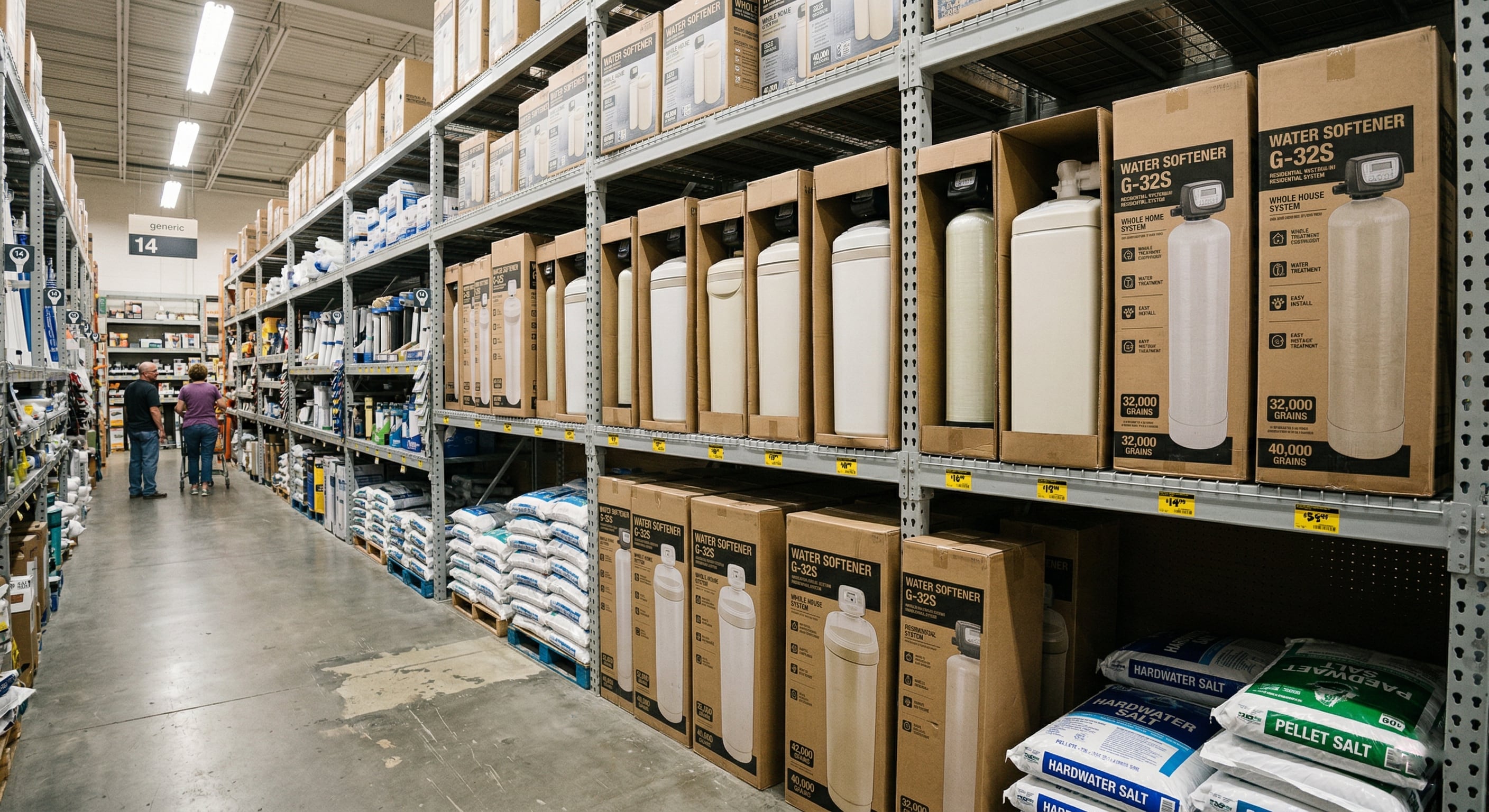
The water softeners on the shelf at Home Depot and Lowe's are built to serve the broadest possible market. That means they're engineered for the national average — roughly 5 to 10 grains per gallon.
Idaho Falls city water measures 14 GPG. Well water in the region regularly tests at 20, 30, even 40+ GPG. That's not a small difference. A unit designed for 5–10 GPG running in 14+ GPG water is like putting a sedan engine in a truck and asking it to haul a trailer up a mountain pass. It'll run. It just won't last.
At these hardness levels, a big-box softener regenerates far more often than it was designed to, burns through salt faster, and wears out its resin bed years ahead of schedule. The money you saved upfront gets eaten by salt costs, early replacement, and the appliance damage it wasn't quite keeping up with.
The Installation Problem
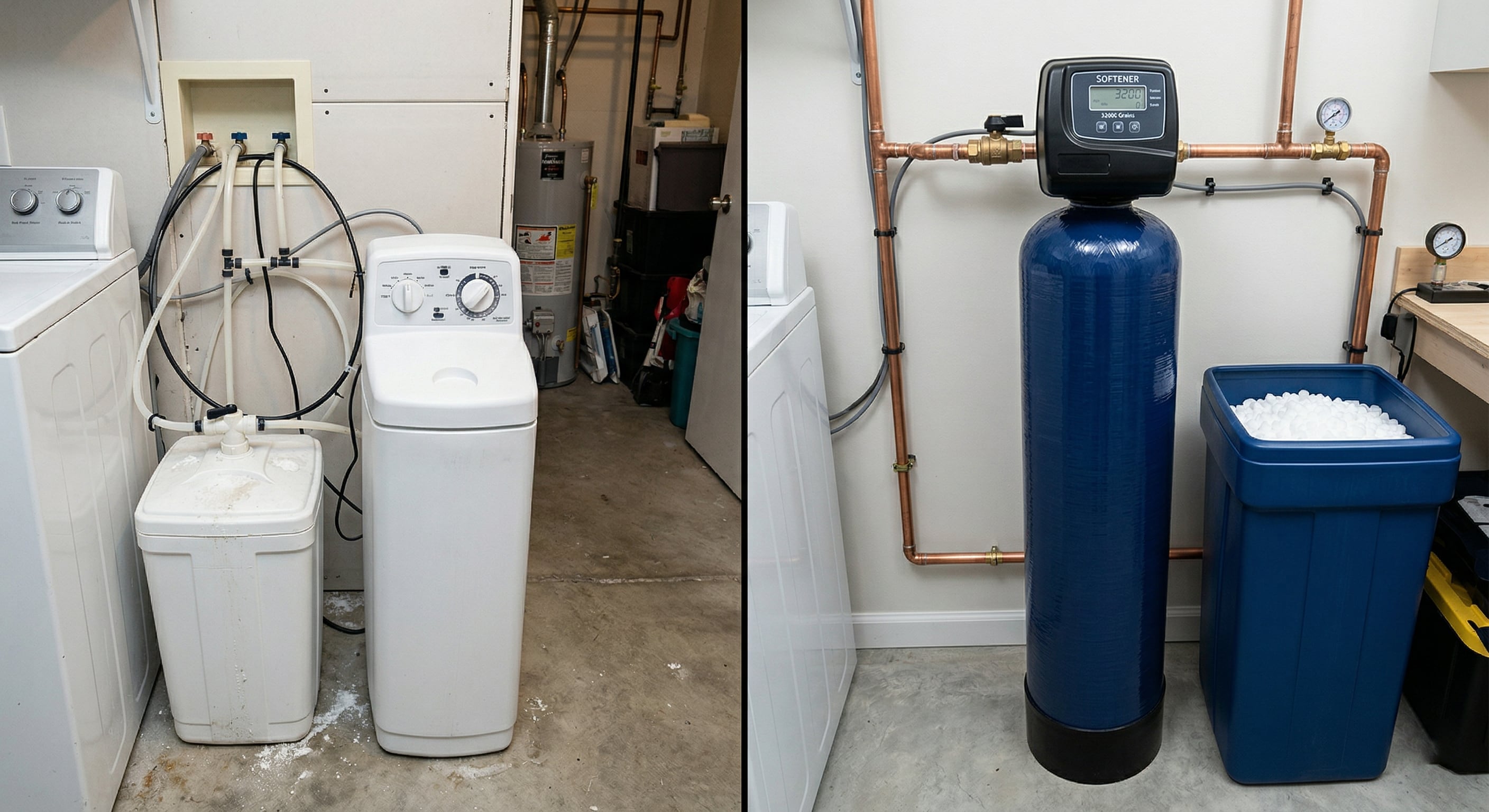
When you buy a water softener at a big-box store and add their installation package, here's what actually happens: they hire a subcontractor — often not a licensed plumber — who gets dispatched to your house. That person didn't choose your unit, doesn't know your water, and gets paid by the job, which means speed beats quality.
I've walked into homes where the big-box installer didn't connect the drain line properly, didn't bypass the outdoor hose bibs, or sized the unit wrong for the household. And then they try to upsell you on an extended warranty or a maintenance contract — because they already know the unit is going to struggle with your water.
A word on citrus and salt-free "softeners"
I've uninstalled more big-box water softeners than I've installed. That includes the citrus "softeners" and salt-free "conditioners" that people buy thinking they'll solve Idaho's hard water problem. At 14+ GPG, those products do essentially nothing. They might make the water feel marginally different, but they're not removing calcium and magnesium. Your scale keeps building. Your water heater keeps suffering.
How the Numbers Actually Compare
People assume the big-box route is significantly cheaper. Let's look at what you actually pay.
| Big-Box Store | Water Softeners Plus | |
|---|---|---|
| Unit cost | $400–$800 | Included in installed price |
| Installation | $300–$600 (subcontractor) | Included — licensed plumber |
| Total installed | $700–$1,400 | $1,799 |
| Salt included | No | Yes — 400 lbs (10 bags) |
| Warranty (tank) | 1–3 years | Lifetime |
| Warranty (resin) | 1 year or none | 10 years |
| Warranty (electronics) | 1 year | 5 years |
| NSF/ANSI 44 certified | Varies — many are not | Yes |
| Built for 14+ GPG water | No — designed for 5–10 GPG | Yes |
| Installed by | Subcontractor | Licensed plumber (Chad Baxter) |
A decent big-box unit with installation runs $1,000 to $1,400. The NuGen Fusion XT installed is $1,799. That's a $400–$800 difference — but for that difference you get a commercial-grade unit with a lifetime tank warranty, 10-year resin warranty, NSF/ANSI 44 certification, 400 lbs of salt, and installation by a licensed plumber who sized the system specifically for your home's water.
Curious what size your home actually needs? Our water softener sizing calculator gives you a grain-capacity estimate in seconds — no guesswork, no oversizing.
And when the big-box unit fails in 4–5 years because it was never built for Idaho water, that initial savings disappears in a single replacement.
The Certification Gap
This one matters more than most people realize. The NuGen Fusion XT is NSF/ANSI 44 certified — meaning its softening performance has been independently tested and verified by a third-party lab. When NuGen says the Fusion XT handles a specific grain capacity at a specific flow rate, that claim is backed by real test data.
Many big-box water softeners are not NSF/ANSI 44 certified. Their performance specs are the manufacturer's own claims, unverified by independent testing. At average water hardness that probably doesn't matter much. At 14+ GPG, where the unit is being pushed hard every day, independently verified performance is the difference between a system that delivers and one that falls short.
The Honest Take
If you live in an area with 5 GPG water — most of Florida, the Pacific Northwest, parts of the East Coast — a big-box water softener will probably do the job just fine. The water isn't hard enough to push those units past their limits, and the lower upfront cost makes sense.
If you live in Southeast Idaho, the math changes. At 14+ GPG on city water — and potentially much higher on well water — you need equipment that was built for extreme hardness, installed correctly by someone who understands Idaho's water, and backed by a warranty that reflects how long the unit will actually last.
That's what we do. No gimmicks, no upsells, no subcontractors. Just the right equipment, installed right, at an honest price.
Frequently Asked Questions
Are Home Depot or Lowe's water softeners any good?
They're adequate for areas with moderate water hardness (5–10 GPG). In Southeast Idaho, where water runs 14+ GPG, big-box units are undersized for the job. They regenerate more often, use more salt, and wear out years faster than a unit built for high-hardness conditions.
Why are big-box water softeners cheaper?
Lower-capacity components, shorter warranties, and no installation included in the shelf price. By the time you add installation by their subcontractor, the total cost is $1,000–$1,400 — closer to a professional installation than the sticker price suggests, but with a significantly lower-quality product.
What's wrong with salt-free water softeners?
Salt-free "softeners" are technically water conditioners — they change how minerals behave but don't actually remove them. At Idaho's hardness levels (14+ GPG), they don't prevent scale buildup, protect appliances, or deliver the benefits of actual soft water. We've removed many of these from homes where the homeowner wasn't seeing any improvement.
What does NSF/ANSI 44 certified mean?
It means the water softener's performance claims have been independently tested and verified by a third-party laboratory — not just stated by the manufacturer. The NuGen Fusion XT carries this certification. Many big-box store brands do not.
How long does a big-box water softener last in Idaho?
At Idaho's hardness levels, most big-box units last 4–7 years before the resin is exhausted or components fail. The NuGen Fusion XT's resin is warrantied for 10 years and the tank and valve body carry a lifetime warranty.
Do you offer free water testing?
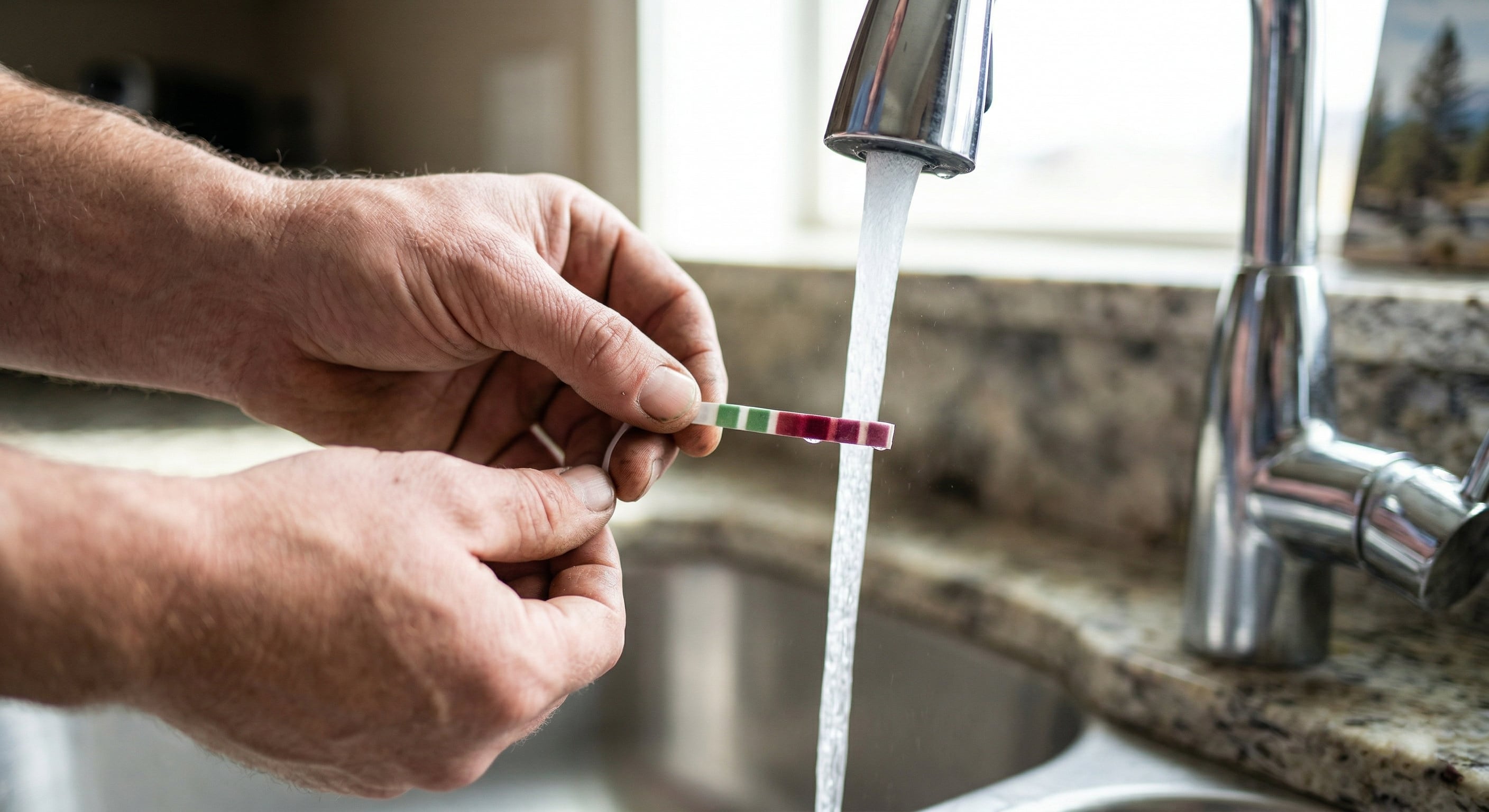
Yes. Water Softeners Plus will test your water at no charge, tell you your exact hardness number, and give you an honest recommendation. No obligation, no pressure. Call Chad at (208) 427-8540.
Want to See the Difference for Yourself?
We'll test your water for free and show you exactly what you're dealing with. If a big-box unit would genuinely handle your water, we'll tell you. But in 24 years of doing this in Southeast Idaho, that hasn't happened yet.